 English
 العربية
 Français
 Deutsch
 Italiano
 Português
 Русский
 Español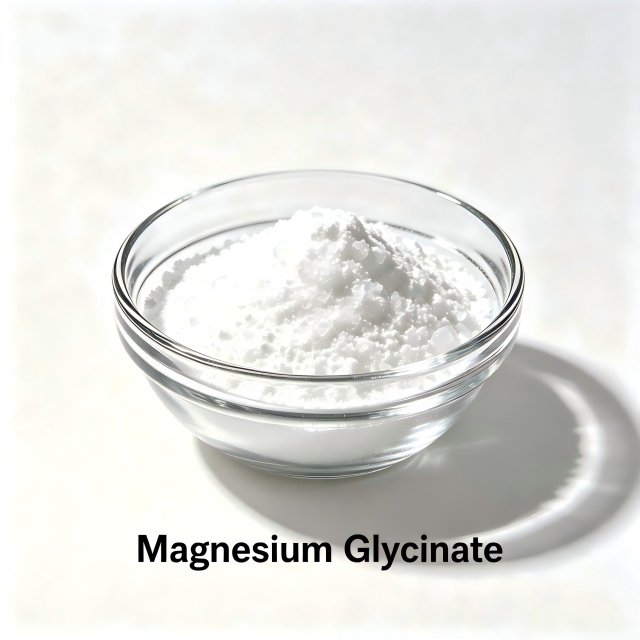
Bei der Beschaffung Magnesiumglycinat-Pulver Für Nahrungsergänzungsmittel, the biggest challenge is not finding suppliers—it is identifying which suppliers can consistently deliver stabile Qualität, accurate specifications, und zuverlässige Dokumentation.
In the nutraceutical ingredient market, differences between suppliers are often not visible at first glance, but they can significantly impact product quality, regulatory approval, and production stability.
This article outlines the key factors buyers typically evaluate when selecting a Magnesium Glycinate supplier.
1. Consistency of Magnesium Content
One of the most important parameters in Magnesium Glycinate is Magnesiumgehalt (%).
Inconsistent magnesium levels can lead to formulation instability and dosage variation in finished products.
Buyers typically look for:
- Clearly defined magnesium content specification
- Batch-to-batch consistency
- Verified laboratory test results (COA)
A stable product should not show significant variation between production batches.
2. Verification of Manufacturing Control
In the supply chain, Magnesium Glycinate may come from different types of suppliers, including manufacturers and trading companies.
From a procurement perspective, it is important to understand:
- Whether the supplier has direct production capability
- How raw material and production processes are controlled
- Whether batch traceability is available
Lack of production control may result in inconsistent quality between orders.
3. Heavy Metal and Safety Compliance
For food-grade and dietary supplement applications, compliance with heavy metal limits is essential.
Typical control parameters include:
- Führen (Pb)
- Cadmium (CD)
- Arsen (Als)
- Quecksilber (Hg)
Reliable suppliers should provide third-party or in-house testing reports for each batch to ensure compliance with international standards.
4. Availability of Technical Documentation
For regulatory approval and product registration, documentation is often required during formulation and import processes.
Common required documents include:
- Analysezertifikat (COA)
- Spezifikationsblatt
- Sicherheitsdatenblatt (Sicherheitsdatenblatt)
- Technisches Datenblatt (Tds)
Missing or incomplete documentation can delay product development and market entry.
5. Supply Stability and Lead Time
Another key consideration is whether the supplier can maintain stable production and delivery.
Procurement teams usually evaluate:
- Production capacity consistency
- Lead time reliability
- Ability to handle bulk orders
- Long-term supply stability
Unstable supply chains can affect production planning and inventory management.
6. Communication and Technical Support
During sourcing, technical communication is often as important as product quality.
Buyers typically need:
- Fast response to specification questions
- Clear technical explanations
- Support with documentation and export requirements
This becomes especially important in international trade where regulatory requirements vary by region.
7. Packaging and Customization Flexibility
Depending on the market, Magnesium Glycinate may require:
- Bulk packaging for manufacturers
- OEM or private label packaging for brands
- Flexible order quantities for different stages of product development
Suppliers with flexible packaging options can better support different business models.
Procurement Summary
When evaluating Magnesium Glycinate suppliers, most buyers focus on three core factors:
- Specification consistency (especially magnesium content)
- Documentation completeness (COA, Sicherheitsdatenblatt, usw.)
- Supply reliability over time
Price is usually considered after these requirements are met.
Magnesiumglycinat-Pulverversorgung
Wir bieten Magnesiumglycinat-Pulver in Lebensmittelqualität mit:
- Stable magnesium content specification (≥10 %)
- Strict quality control and batch testing
- Full technical documentation support (COA, Sicherheitsdatenblatt, Tds)
- Bulk supply capability for global nutraceutical markets
Abschluss
Selecting a reliable Magnesium Glycinate supplier is primarily a risk management decision rather than a price comparison.
A well-qualified supplier helps reduce formulation risks, ensures regulatory compliance, and supports stable production planning.
Verwandte Artikel
- Was ist Magnesiumglycinat?? Vorteile, Verwendungen und Anwendungen
- Magnesiumglycinat vs. Magnesiumcitrat: Was ist der Unterschied??
- Warum der Magnesiumgehalt in Magnesiumglycinat-Pulver wichtig ist
- Top-Anwendungen von Magnesiumglycinat in Nahrungsergänzungsmitteln