
 English
 العربية
 Français
 Deutsch
 Italiano
 Português
 Русский
 Español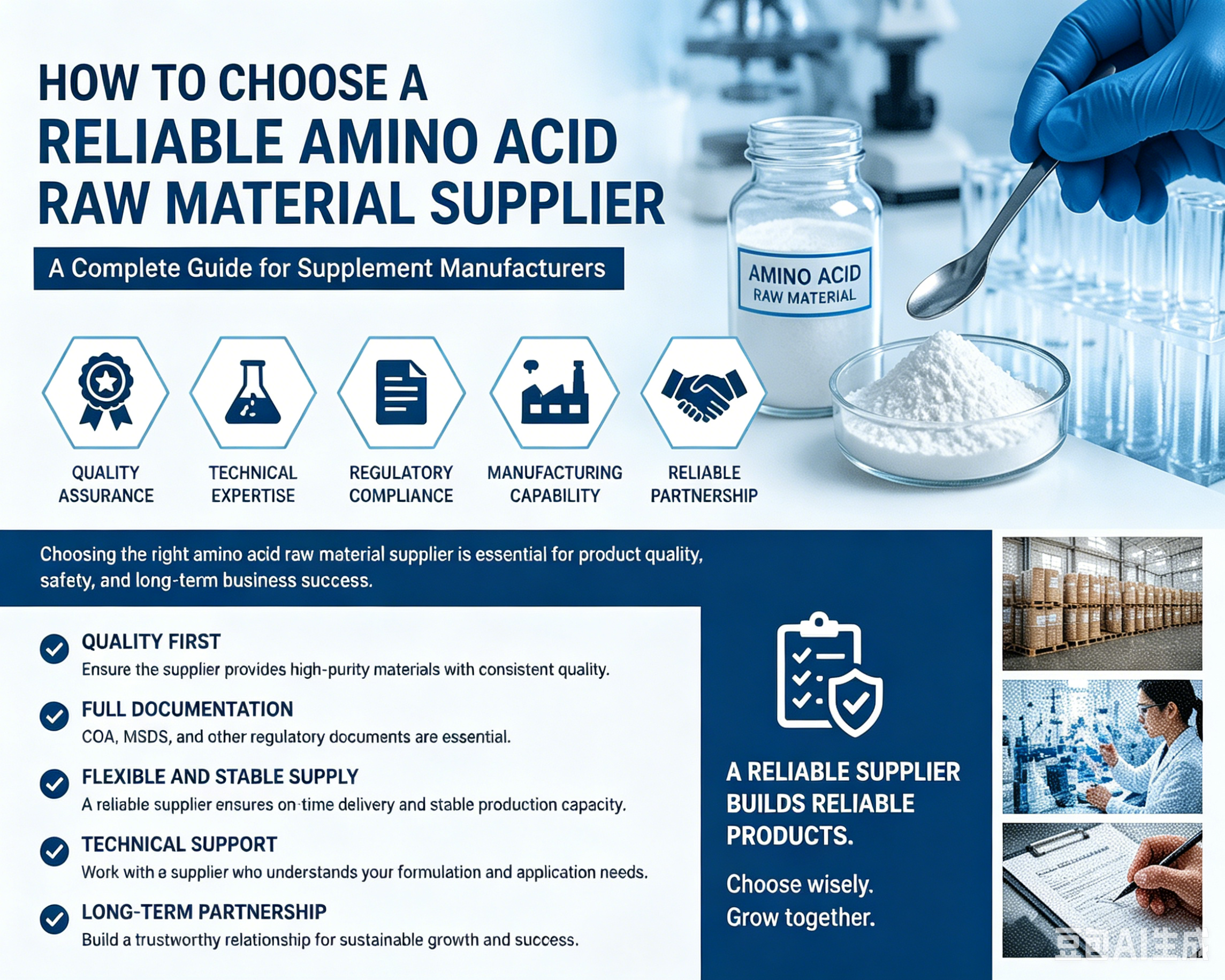
Why Choosing the Right Amino Acid Supplier Matters
Selecting a reliable amino acid raw material supplier is crucial for ensuring the quality and consistency of dietary supplements, sports nutrition products, and pharmaceutical formulations. In addition to consistent purity, high-quality suppliers help manufacturers maintain stable production, meet regulatory standards, and reduce batch-to-batch variability. Without a trusted partner, even the best formulations can fail to meet market expectations.
Key Factors to Consider
When evaluating potential suppliers, there are several critical aspects to prioritize:
1. Product Quality and Consistency
Reliable suppliers provide high-quality amino acid raw materials with consistent purity, solubility, and stability. Beyond meeting minimum purity levels, each batch should be tested and accompanied by complete COA and MSDS documentation. These records not only validate quality but also simplify regulatory audits for your business.
2. Production Capability
Consistent production capability ensures uninterrupted manufacturing and prevents formulation issues. For this reason, you should choose suppliers who can handle bulk orders and maintain steady supply, even during periods of high demand. A supplier with scalable production lines will help you avoid costly delays in your own production schedule.
3. Regulatory Compliance
Regulatory-compliant suppliers help you avoid legal issues in target markets. Specifically, they must comply with international standards such as BRC, KOSHER certifications. These certifications are non-negotiable for manufacturers looking to sell products in regions with strict food and supplement safety laws.
4. Technical Support
A professional supplier offers technical guidance on formulation, solubility, and compatibility. This support can help manufacturers optimize product performance and stability. Unlike generic raw material providers, specialized partners will work with you to troubleshoot challenges, from adjusting pH levels to improving ingredient absorption rates.
5. Global Supply and Logistics
For international customers, suppliers with export experience can provide smooth logistics, ensuring that materials arrive safely and on time. By working with a supplier familiar with cross-border shipping regulations, you can reduce the risk of customs delays or lost shipments. Reliable logistics also means you can maintain lean inventory without the fear of stockouts.
Popular Amino Acid Ingredients
Reliable suppliers typically provide a range of amino acid raw materials, including:
- Potassium Aspartate Monohydrate
- L-Glutamine
- L-Arginine
- BCAA
These ingredients are widely used in dietary supplements, functional foods, and sports nutrition formulations.
How to Build a Long-Term Supplier Relationship
Building trust with your supplier requires intentional effort and consistent communication. To start, evaluate supplier performance regularly, tracking key metrics like on-time delivery and batch quality. In addition, maintain clear communication regarding quality and delivery expectations from the beginning. For better supply chain planning, share forecasting data to help your supplier prepare for your upcoming needs. Finally, conduct periodic audits if needed to verify compliance and production standards.
A strong partnership ensures consistent raw material quality and supports smooth production for your products. Over time, this collaboration can even lead to custom formulations and priority access to new ingredients.
Related Blogs
To learn more about amino acid raw materials in general, read our guide: Amino Acid Raw Materials
For deeper insights into potassium-based ingredients, explore: Potassium-Based Amino Acids in Nutritional Formulations
To see practical examples of how these materials are used, check out: How Amino Acid Raw Materials Are Used in Supplement Formulation
Conclusion
Choosing a reliable amino acid raw material supplier is a critical step for supplement and nutraceutical manufacturers. By evaluating quality, production capability, compliance, and technical support, you can ensure stable production and high-quality final products. Beyond these basics, it’s also important to prioritize long-term partnerships that align with your business growth goals.
Partnering with the right supplier ultimately saves time, reduces risk, and supports product success in competitive markets.

